Friday, August 15, 2014

600 Apple iPhones stolen by Apple Employees


Sometimes it is those on the inside that you need to be worried about the most. In Fort Lauderdale, six Apple Store employees were snagged by the cops, as law enforcement smashed an iPhone theft ring that worked out of an Apple Store at the tony Galleria Mall. The six worked together to rip off the store out of 600 iPhones, valued at half a million dollars.

The scheme involved a number of thieves who wandered into the Apple Store, pretending to be customers. In the store, these "customers" would be helped by one of the six employees in on the scam, who would exchange a stolen iPhone for a brand new unit. The Apple Store employees who helped the transactions go through, were paid between $45 and $75 per unit for facilitating the exchange.

The cops arrested former Apple Store employees Devon Persad, Daniel Michael Scotti, Adam Alvarez, Anthony Joseph Tranchida, Sadia A. Dandia, and Otis Jerrell Ferguson. A seventh person arrested was Best Buy Mobile employee Sean Flynn. Flynn provided a list of serial numbers from smartphones on the shelves at Best Buy Mobile, to the other criminals. These numbers were used on the new iPhone models stolen from the Apple Store. 

The cops are looking to identify those who brought the stolen phones into the Apple Store. They are also still looking to find the buyers of the new units that the stolen phones were exchanged for. A Broward Country prosecutor says that the phones were probably sold overseas.

The scheme was discovered when the stolen phones sent in to Apple from the Apple Store, sent off alarms in Cupertino. At the same time, some customers of the Best Buy Mobile store were complaining that they could not get their newly purchased iPhones to work. That was because their serial numbers had been stolen by Flynn and used on the new handsets smuggled out of the Apple Store.

Alienware Alpha console hits preorder


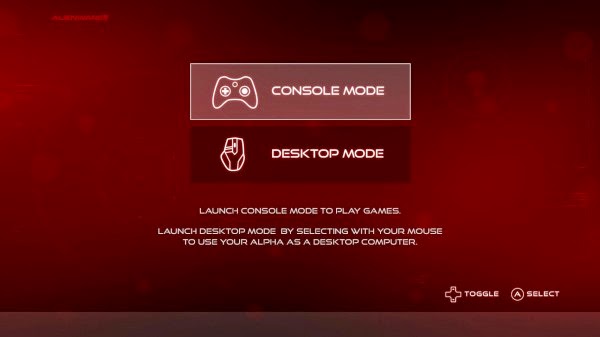
Alienware's Alpha console has gone up for preorder, no longer waiting for the delayed SteamOS and instead running Windows 8.1 with deep ties into the Steam game library thanks to a homegrown couch-friendly interface. Priced from $549, the Alpha runs a choice of Intel Haswell dual- and quadcore Core i chip, paired with a custom NVIDIA Maxwell GTX GPU with 2GB of its own memory, and up to 16GB of DDR3 system memory. That's all squeezed into a box that's compact enough to fit discretely under your TV.

The matte and gloss finish black box contains a single 2.5-inch hard-drive bay, as well as a choice of wireless cards up to 2x2 802.11ac dual-band and Bluetooth 4.0.

It's not short on ports, either: as well as two USB 2.0 on the front there are two USB 3.0 on the back, along with gigabit ethernet, HDMI out and HDMI in, and an optical audio output. A further USB 2.0 is inside, accessed by a hatch on the bottom.
Alienware's familiar "AlienFX" multicolor lighting is present, though given the size of the console it's limited to just the company logo and the glowing triangle on the notched edge. Each can be independently controlled, as well as set to adjust automatically according to game events.

The original plan, of course, was to launch the Alpha with Valve's SteamOS. However, that platform is now delayed, and so Alienware has developed its own Alpha UI that can be controlled entirely with a gamepad and seen all the way across the living room from your couch.

AlphaUI 8
That includes an on-screen keyboard and cursor control, so that you never need to plug in a keyboard or mouse, and support for Steam Big Picture mode. There are more than 500 controller-compatible games in the Steam library, but you can also go into the regular Windows 8.1 desktop and do anything you would with a regular PC.

Alienware also supports what it's calling "Open Console", a platform which will allow the Alpha to be modified and then those custom versions shared with other owners.

It's compatible with the Xbox One controller and the Xbox 360 controller, and there'll be four versions at launch with varying CPUs, storage, and memory; a single Xbox 360 pad will be in the box too. Preorders begin today, from $549.

Thursday, August 14, 2014

The Top 5 Most Brutal Cyber Attacks Of 2014 So Far


In 2014, cyber attacks and data breaches don’t look like they’re going to slow down. We’ve seen high-end data breaches of large companies, with data, personal records and financial information stolen and sold on the black market in a matter of days.

Analysts, Hold Security, startlingly announced in February that it had managed to obtain a list of 360 million account credentials for web services from the black market. That’s just after three weeks of research.

Criminals are stepping up their game and data breaches are becoming both common and devastating. According to research from Arbor Networks, the number of DDoS events topping 20Gbps in the first half of 2014, are double that of 2013. With more than 100 attacks at over 100Gbps or higher recorded in the first half of the year.

Akamai Technologies AKAM +2.05%’ State of the Internet report also showed that hacker attacks on websites went up 75% in the final quarter of 2013, with hackers in China responsible for 43% of all attacks.

This incredible interactive map from Antivirus software firm Kaspersky, which depicts all the current cyber attacks occurring around the world in real time, shows the growing intensity of hacks as the year progresses.

We’re only half way through the year, but there has already been a few high-profile hacks that have stopped presses. Here I’ll explore – in no particular order – the most brutal hacks that have taken place in 2014 so far.
Ebay

eBay went down in a blaze of embarrassment as it suffered this year’s biggest hack so far. In May, eBay revealed that hackers had managed to steal personal records of 233 million users. The hack took place between February and March, with usernames, passwords, phone numbers and physical addresses compromised.
eBay

Hackers successfully stole eBay credentials and managed to gain access to sensitive data. eBay encouraged users to change their passwords and reassured them that financial information was not stolen, as it’s stored separately and encrypted. Although there were further concerns that the stolen personal information could leave eBay users vulnerable to identity theft.

Despite eBay not confirming who was behind the attack, the notorious Syrian Electronic Army claimed responsibility. Despite the huge data breach and the sensitivity of the data, the SEA said that it was a “hacktivist operation” and that they “didn’t do it to hack people’s accounts”.
Montana Health Department

The State of Montana’s health department revealed that a data breach may have affected more than 1 million people. The hack actually happened in July last year, but it wasn’t discovered until May this year, with the identity of the intruders, and the extent of the damage done, still unclear.

The state government said that it is notifying 1.3 million people including current and former residents, families of the dead and anyone else whose personal information may have been accessed in the attack.

It’s not clear if the attackers made-off with sensitive information, or if it had been used or sold on the black market. Richard Opper, director of the state’s Department of Public Health and Human Services, said that there’s “no indication” the hackers accessed the information or used it inappropriately.

If they did, hackers would’ve gained access to highly personal information such as Social Security numbers, medical records, medical insurance records, names, addresses and birth certificates. Not to mention the bank details of all health department employees.
P.F. Chang’s

The chain restaurant suffered a huge data breach last month that compromised customer payment information. Chang’s didn’t specifically mention how many customers had been affected, but thousands of newly stolen credit and debit cards went up for sale online on June 9th.

Several banks had gotten in touch with Brian Krebs, a security journalist, to say that “they acquired from this new batch, multiple cards that were previously issued to customers, and found that all had been used at P.F. Chang’s locations between the beginning of March 2014 and May 19, 2014.”

Criminals managed to hack P.F Chang’s point of sale machines and record credit and debit card data, which then found its way on to the black market. Stolen records were being sold for between $18 and $140, with the price depending on how fresh the stolen data is. Chang’s responded by going low-tech and using age old manual credit card imprinting machines to take payment in its stores, which it then upgraded to new “encryption-enabled terminals”.

Chang’s is still working with the US Secret Service to discover the identity of the hackers.
Evernote and Feedly

It’s not clear if the attacks on both Feedly and Evernote were connected, but they happened within a day of each other and the two companies work largely in tandem. Whilst Evernote was taken down with a Distributed Denial of Service (DDoS) on Tuesday June 10th and was quickly restored within a few hours, Feedly, which went down the next day, suffered much more.

Evernote

The news aggregation service was attacked in the early hours of Tuesday morning. CEO of Feedly, Edwin Khodabakchian, announced on Feedly’s official blog that the attack had been “neutralized” and that normal service had restored. However, two more DDoS waves were launched at Feedly which bought it down for another two days, with service being properly restored on June 14th.

Not much about the attacker is known, other than that they attempted to extort money out of Feedly in exchange for ending the attacks.  Khodabakchian said that he refused to comply with the attacker’s ransom demands and the threat, eventually, was neutralized.
Domino’s Pizza

Hacking group Rex Mundi held Domino’s Pizza to ransom over 600,000 Belgian and French customer records. In exchange for the personal data, which included names, addresses, emails, phone numbers and even favourite pizza toppings, Mundi demanded $40,000 from the fast-food chain.

If the ransom wasn’t met, the hackers threatened to publish the information online. The group then taunted Domino’s by saying: “Earlier this week, we hacked our way into the servers of Domino’s Pizza France and Belgium, who happen to share the same vulnerable database. boy, did we find some juicy stuff in there.”

Domino’s refused to comply with the ransom and reassured customers that financial and banking information was not stolen. The hacking group had its Twitter account suspended and the data was never released, although it’s not clear if Domino’s ever complied with the ransom demands.

CIA apologizes for spying on Senate committee

 CIA Director John Brennan apologized to the Senate Intelligence Committee on Thursday and admitted the agency spied on computers used by its staffers who prepared an investigation of the controversial post 9/11 CIA interrogation and detention program.

The episode was the subject of an unusual, public dispute between the panel and the spy agency over access to classified information.

The CIA had accused the committee staffers of getting access to internal agency documents and of improperly handling classified material.
Pelosi calls CIA allegations 'appalling'
Senate: CIA evidence suddenly disappeared

The Justice Department looked into it at the request of the CIA and decided there wasn't enough evidence of a crime to warrant further investigation.
"The director is committed to correcting any shortcomings related to this matter" and is commissioning an Accountability Board to be chaired by former Indiana Democratic senator and Intelligence Committee member Evan Bayh, the CIA said.
"This board will review the (inspector general's) report, conduct interviews as needed, and provide the director with recommendations that, depending on its findings, could include potential disciplinary measures and/or steps to address systemic issues." the CIA added.

Wireless HardDrive: Seagate


The shift from PCs and laptops to tablets and smartphones has brought about quite a few shifts in habits and expectations. Different devices have different capabilities and you don't always have the right one with you at the right time.

One of the most frustrating things about using multiple devices is making sure the files you need are available on all of them. Capacities are limited and not always expandable. It also isn't easy to move files from Android to iOS and vice versa. Folks who need to move around a lot usually wind up dependent on some form of online storage which is good enough for text and small files, but impractical for music, video and bulk storage.

Seagate offers a line hard drives that work across all platforms, called Wireless Plus, which can act as hubs for all your digital devices; wired or wireless. It uses Wi-Fi to connect to portable devices and can be accessed by multiple people simultaneously. We had reviewed the 1TB model when it first launched last year, and found it to be a very interesting solution to the problems of storage and inter-accessibility.

Between then and now, Seagate has added support for Amazon's Kindle Fire OS and the Windows 8/RT Modern UI. The companion app for Android and iOS has been totally revamped, and you can now write files to the drive from it. There's also support for integration with Google Drive and Dropbox so you can pull files from these two cloud services as well.
We now have the new 2TB model with us for review. With a high price but equally high capacity, is it just a novelty or a genuinely practical tool?

Look and feel
The Wireless Plus is very thick, chunky and heavy by current standards for portable hard drives. That's mainly because of the hefty battery which is rated for 10 hours of operation. The body is entirely plastic but the top has a brushed metal texture.

There's a Micro-USB 3.0 on the rear like any other hard drive. There's a power button on the left edge and two status LEDs on the front. One LED shows you the device's charge status, while the other lets you know when it's possible to connect via Wi-Fi.

The drive isn't really pocketable and you'll notice its weight in a bag, but that's a fair tradeoff if you want 2TB of data with you at all times and accessible from any device.

You'll find a USB 3.0 cable, charger head, three international plug adapters and a printed guide in the box.


Setup and usage
First of all, you can use the Wireless Plus just like any other portable USB hard drive. Simply plug it in and fire up Windows Explorer or the OSX Finder and browse through its contents. All Wi-Fi functions are disabled when a USB connection is detected, but the battery will charge while it's plugged in.

The drive came preformatted to NTFS and we found that the actual usable capacity was 1.81TB. A driver that enables full OSX read/write access is included on the drive itself, or you can reformat it to HFS+ if you prefer.

To connect via Wi-Fi, all you have to do is press the power button on the side for a few seconds and then wait for the blue Wi-Fi LED to stop flashing. This means it is broadcasting its own signal like your router does. You'll be able to see it in any device's list of available connections, and there's no password or other security by default. Up to eight devices can connect to the Wireless Plus simultaneously but only five can stream media at any time.


Once a connection is established between the Wireless Plus and your device, you can fire up the Seagate Media app (available on Android, Kindle Fire and iOS as well as the Windows 8/RT Modern UI) which will immediately show its contents sorted by media type. Alternatively, you can visit www.seagatewirelessplus.com in any device's browser window, which will give you the same functionality but with a less fluid interface. This is a nice touch, and it means you don't have to go digging around for the drive's IP address. The Web interface is especially handy for other people to access your files without downloading the app first.

The Seagate Media app is required to configure the Wireless Plus. You'll want to set up Wi-Fi security and configure a passthrough so that you can still connect to the Internet - the drive connects to your router and your device connects to the drive. You can also see the drive's battery level, check who is currently connected to it, and set up sharing and synchronisation with Dropbox and Google Drive.

For the most part, the app is not very well designed. It has a lot of functionality but media is not displayed intuitively and there are limited options for sorting and filtering. You can't browse by folder; only by media type. It also doesn't support many video formats. Luckily, this isn't a problem - you can use third-party apps such as VLC Media Player. Just let it scan the local network (which in this case is only the Wireless Plus itself) and you'll be able to access everything. In fact once the initial setup is done, there's really no need to launch the official app at all.


The Wireless Plus is also DLNA compliant, which means devices such as game consoles, smart TVs and digital media players can be used to browse and stream its contents. You'll need to set up the Wi-Fi passthrough so that the Wireless Plus is connected to your home network, after which other connected devices recognise it seamlessly just like any network-attached storage (NAS) or PC would be. Once you've configured the drive's Wi-Fi passthrough settings and it knows how to connect to your home network automatically, you should also be able to just turn it on and use it via your other DLNA products without needing its own app.

Seagate offers remote access features with all its network-attached drives, and the Wireless Plus is no different. In fact, you could leave it plugged in to a wall socket and it would function just like any other NAS on your home network and over the Internet.

All this makes the Wireless Plus an incredibly useful and versatile product.


Performance
We tested the Wireless Plus with an iPhone 5c, a fourth generation iPad, a Windows 8 laptop and a WD Live network media receiver. We had no problem with Wi-Fi stability, although it took up to a minute for the drive to become ready for use each time it was turned on.

Media streaming worked pretty well as long as we were using an app that supported the file formats we wanted to play instead of the official app. Stuttering was extremely rare, but skipping around the timeline while playing video files made the stream drop quite often.

When used as a desktop drive, SiSoft SANDRA gave us scores that were a bit better than those of the Seagate Backup Plus, a vanilla USB 3.0 hard drive. Sequential read and write scores were 118.93MBps and 119.14MBps respectively, while random read and write scores were 55.43MBps and 66.63MBps respectively.

Verdict
There's no denying the fact that it's amazing to be able to have 2TB of data so easily accessible from such a wide variety of devices. The Wireless Plus could completely change the way you work and travel. You'll be able to get a lot of things done with a smartphone or tablet that would have previously required you to carry a laptop around.

However it is bulky, heavy and expensive. It also relies on a traditional spinning hard drive, which is sensitive to jerks, falls, and other forms of physical damage. You will need to look after it just as carefully as you do any other hard drive - and you should never store important data in only one place.

The 2TB model is very expensive, so you could still go with the 1TB model and enjoy the benefits of the new app. If you don't need so much space and versatility, or if portability and cost are very important, the Kingston MobileLite Wireless which uses SD cards and USB flash drives as the storage media is a very compelling alternative.
Price: Rs. 18,500 (2TB)

Pros

    Extraordinarily versatile
    Supports multiple platforms
    Massive capacity
    Impressive performance

Cons

    Expensive
    Bulky and heavy

Ratings (Out of 5)

    Design: 3.5
    Performance: 4
    Value for Money: 3.5
    Overall: 3.5

Floating Bluetooth Speaker

Looking for a Bluetooth speaker that doubles as a party trick? Audio accessory maker OM Audio has just unveiled its OM/ONE speaker, which is essentially a floating orb that can spin as it plays music.

The $179 OM/ONE uses Bluetooth 4.0 to connect to smartphones, tablets and computers. But the project is still raising money on the crowdfunding site Tilt. Non-backers of the project will have to pay $199 when OM/ONE is launched later this year.

The orb also works independently of its base while it's not floating, so you can easily grab it and toss it in your bag without lugging around its stand.

It's unclear how the speaker floats, but we assume the engineers used special magnets.

In addition to streaming music, OM/ONE comes with an in-built microphone for enabling conference calls. The company claims speaker can last for 15 hours on a single charge.

While the speaker's floating capabilities are downright impressive, it's unclear if this actually offers any benefit beyond its cool factor. OM/ONE hasn't specified how this affects the speaker's audio quality if at all.

OM/ONE has also not mentioned the official launch date, but if you order it today, you're guaranteed to receive it by the holiday season.

Tuesday, August 12, 2014

SAMSUNG GEAR SOLO.:Stand-Alone Smartwatch

We think the idea of stand-alone smartwatches is not yet feasible in the present market scenario, but Samsung thinks otherwise. Reports indicate that Samsung is moving ahead with plans for a smartwatch with its own SIM card and hence, doesn’t need a paired phone. It seems likely that we’ll hear about it as soon as next month.
Korean newspaper The Chosun Ilbo reports that Samsung intends to unveil the Gear Solo watch at the big IFA conference in September. As speculated, the Gear Solo will not require a smartphone for communication functionality, and will be able to place calls, send texts and emails, and perform other tasks with its own SIM card, cellular radio, and service plan.
Samsung Gear Neo
Samsung Gear 2 Neo
The inclusion of SIM support in a smartwatch would enable users to make phone calls from the device, but it is yet to be revealed how Samsung has tackled the issue of heavy battery drain. Samsung has launched three Tizen-powered versions of its Gear smartwatch to date, and one Android Wear model in the form of the Galaxy Gear Live.
Samsung released the Gear 2 and Gear 2 Neo at this year’s MWC, less than six months after their predecessor. The logic of releasing a smartwatch alongside a smartphone makes sense, but in this case the Gear Solo won’t depend on tethering itself to any other device, hence will get a different sort of treatment in the market.
However, Samsung used last year’s IFA to launch the original Galaxy Gear, so it seems a good time as any to unleash a new smartwatch frenzy. Timex Group also announced a smartwatch with its own cellular connection, letting it transmit data without needing to be connected to a smartphone. The company calls it the Ironman One GPS+, and while it may have features commonly found in a smartwatch, it is made mostly for athletes like its predecessors.