Sunday, July 5, 2015

Qualcomm Snapdragon 820 with Kryo CPU


The Qualcomm Snapdragon 820 chipset was just made official at MWC 2015. The chipset will be built on a FinFET manufacturing process, but Qualcomm didn't specify if this means TSMC's 16nm or Samsung's 14nm tech will be used.


The star of the Snapdragon 820 chip, which debuts Qualcomm's Zeroth platform. It promises to be a cognitive computing platform, which means that it can anticipate users needs and actions in advance. One real-life application of the platform as demoed on stage is a camera recognizing the subject of the photo.
Inside the chip Qualcomm's custom ARMv8 CPU core also makes a first appearance. Dubbed Kryo, it sports 64-bit architecture, but at this point there aren't any more details regarding it.

Qualcomm says it will start sampling the Snapdragon 820 in the second half of 2015. This leaves us to anticipate the first devices rocking the chip early 2016. Expect more information about the Snapdragon 820 as it becomes available.

Qualcomm® Snapdragon™ LTE Modems deliver fast, smooth, and reliable voice and data performance to today’s smartest devices. With built-in intelligence, Snapdragon LTE Modems automatically connect to the best available network, supporting a virtually always-on connection and a rich user experience. Browse, share, sync, stream and talk from almost anywhere.* Advanced connectivity from Snapdragon enables your device to do more, so you can do more.

Want to store your Data in your Cloud with Encryption

Today technology is so developed that you can upload your files  or document to your cloud storage in Encrypted format. There are many tools which provide you this option to upload your document to cloud storage.

One of the tool to provide encryption to your files is Cryptomator. This tool provides you free encryption to your files and this tools is free and open source. Cryptomator is client side AES Encryption tool for you cloud files.

This tool encrypt your files before uploading to your cloud storage and it is only you who can see the files.Cryptomator provides transparent, client-side encryption for your cloud. Securely protect your documents from unauthorized access. Cryptomator is open source software, so you can rest assured there are no backdoors.

The Following video show how it works
Features:

Secure

Cryptomator encrypts your files' contents and names using AES with up to 256 bit keylength. Scrypt hardens your key against bruteforcing.

Transparent

Your applications can work with encrypted files without even noticing. Cryptomator will make your encrypted folder available as a virtual hard drive.

Lean

Cryptomator doesn't flood your computer with funny support files or even drivers. Also Cryptomator's internals are very simple. We believe, that complexity kills security.

Easy

Choose a password and continue working normally on your files. No configuration needed. No accounts required.

Trustworthy

Cryptomator is secure. Ever read this sentence before? Well in this case you don't need to trust us. You can control us. Cryptomator is completely open source software.

Discreet

Cryptomator doesn't need your cloud passwords. It works on your local machine and doesn't care about the accounts you use.

Compatible

Dropbox, OneDrive, Google Drive, ...? Cryptomator works with every single cloud storage provider, as long as your files are sync'ed to your computer.

Multiplatform

Cryptomator is based on Java technology and runs on all major desktop operating systems. Smartphone apps will follow.

Free and open source

Other than most cloud encryption tools, Cryptomator doesn't cost a penny. You don't even need to create an account! It is open source software licensed under the MIT X Consortium license, so you will never stand in front of locked doors in the future.

Friday, July 3, 2015

Design and Connectivity of Project Loon

Loon is designed in three part are :

1. Envelope

A small box containing the balloon’s electronics hangs underneath the inflated envelope, like the basket carried by a hot air balloon. This box contains circuit boards that control the system, radio antennas to communicate with other balloons and with Internet antennas on the ground, and lithium ion batteries to store solar power so the balloons can operate throughout the night.

2. Solar Panels

Each balloon’s electronics are powered by an array of solar panels. The solar array is a flexible plastic laminate supported by a light-weight aluminum frame. It uses high efficiency monocrystalline solar cells. The solar array is mounted at a steep angle to effectively capture sunlight on short winter days at higher latitudes. The array is divided into two sections facing in opposite directions, allowing us to capture energy in any orientation as the balloons spin slowly in the wind. The panels produce approximately 100 Watts of power in full sun, which is enough to keep Loon’s electronics running while also charging a battery for use at night. By moving with the wind and charging in the sun, Project Loon is able to power itself using entirely renewable energy sources.

3. Electronics

A small box containing the balloon’s electronics hangs underneath the inflated envelope, like the basket carried by a hot air balloon. This box contains circuit boards that control the system, radio antennas to communicate with other balloons and with Internet antennas on the ground, and lithium ion batteries to store solar power so the balloons can operate throughout the night.

How Loon Connects

Each balloon can provide connectivity to a ground area about 40 km in diameter using a wireless communications technology called LTE. To use LTE, Project Loon partners with telecommunications companies to share cellular spectrum so that people will be able to access the Internet everywhere directly from their phones and other LTE-enabled devices. Balloons relay wireless traffic from cell phones and other devices back to the global Internet using high-speed links.

Where Loon is Going

Project Loon began with a pilot test in June 2013, when thirty balloons were launched from New Zealand’s South Island and beamed Internet to a small group of pilot testers. The pilot test has since expanded to include a greater number of people over a wider area. Looking ahead, Project Loon will continue to expand the pilot, with the goal of establishing a ring of uninterrupted connectivity at latitudes in the Southern Hemisphere, so that pilot testers in these latitudes can receive continuous service via balloon-powered Internet.

Google's Project Loon to provide Internet to the Global Community

Many of us think of the Internet as a global community. But two-thirds of the world’s population does not yet have Internet access. Project Loon is a network of balloons traveling on the edge of space, designed to connect people in rural and remote areas, help fill coverage gaps, and bring people back online after disasters.


The Technology Behind the Project Loon

Project Loon balloons float in the stratosphere, twice as high as airplanes and the weather. In the stratosphere, there are many layers of wind, and each layer of wind varies in direction and speed. Loon balloons go where they’re needed by rising or descending into a layer of wind blowing in the desired direction of travel. By partnering with Telecommunications companies to share cellular spectrum we’ve enabled people to connect to the balloon network directly from their phones and other LTE-enabled devices. The signal is then passed across the balloon network and back down to the global Internet on Earth.

Project Loon began in June 2013 with an experimental pilot in New Zealand, where a small group of Project Loon pioneers tested Loon technology. The results of the pilot test, as well as subsequent tests in New Zealand, California’s Central Valley and in Northeast Brazil, are being used to improve the technology in preparation for the next stages of the project.

Working of the Loon

Loon Flies Navigating with the Wind


Project Loon balloons travel approximately 20 km above the Earth’s surface in the stratosphere. Winds in the stratosphere are stratified, and each layer of wind varies in speed and direction. Project Loon uses software algorithms to determine where its balloons need to go, then moves each one into a layer of wind blowing in the right direction. By moving with the wind, the balloons can be arranged to form one large communications network.


Loon Flies in Stratosphere


Situated on the edge of space, between 10 km and 60 km in altitude, the stratosphere presents unique engineering challenges: air pressure is 1% that at sea level, and this thin atmosphere offers less protection from UV radiation and dramatic temperature swings, which can reach as low as -80°C. By carefully designing the balloon envelope to withstand these conditions, Project Loon is able to take advantage of the stratosphere’s steady winds and remain well above weather events, wildlife and airplanes.


Thursday, July 2, 2015

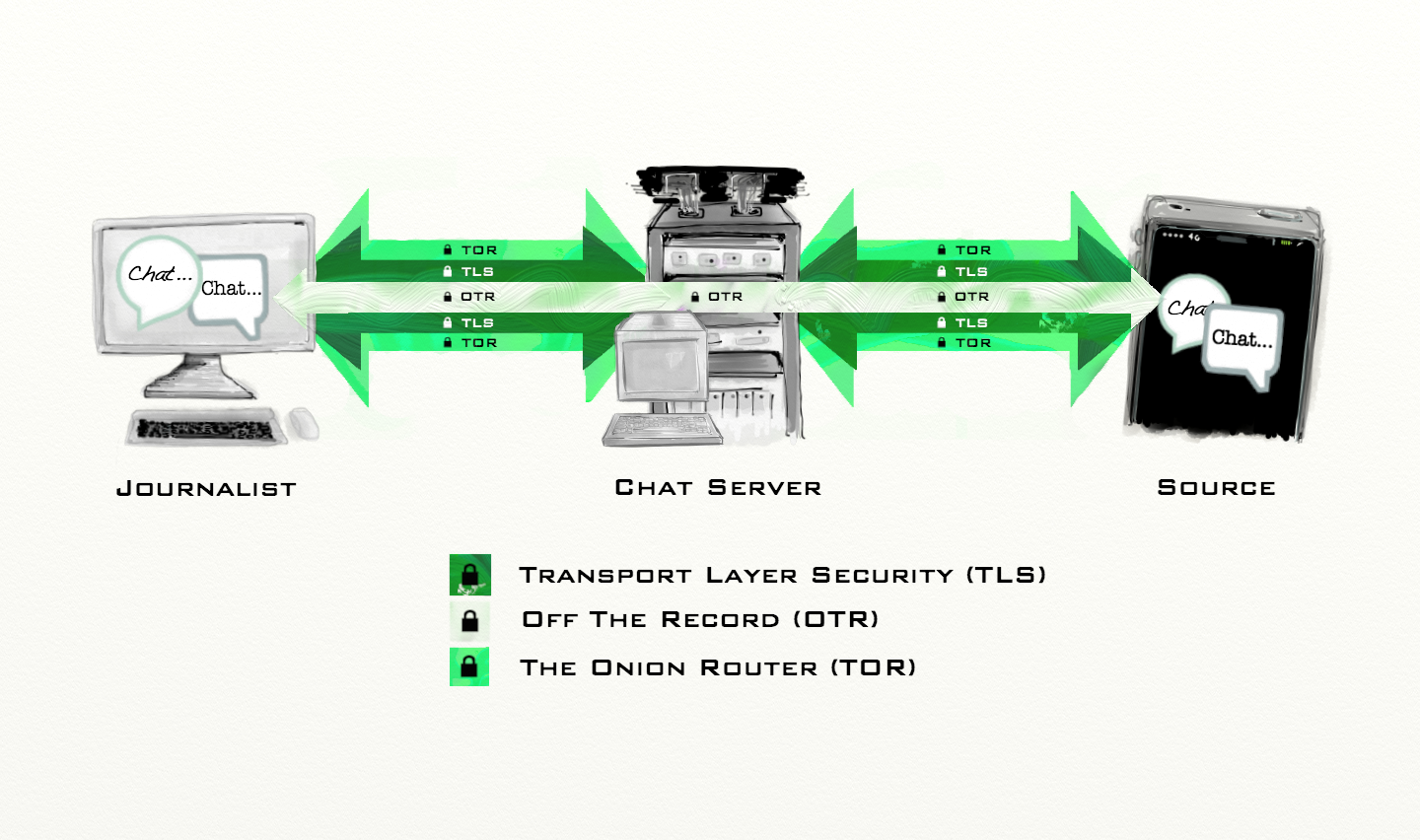
OTR (Off-The-Record) Messaging Encryption

Off-the-Record Messaging (OTR) is a cryptographic protocol that provides encryption for instant messaging conversations. OTR uses a combination of AES symmetric-key algorithm with 128 bits key length, the Diffie–Hellman key exchange with 1536 bits group size, and the SHA-1 hash function. In addition to authentication and encryption, OTR provides forward secrecy and malleable encryption.


The primary motivation behind the protocol was providing deniable authentication for the conversation participants while keeping conversations confidential, like a private conversation in real life, or off the record in journalism sourcing. This is in contrast with cryptography tools that produce output which can be later used as a verifiable record of the communication event and the identities of the participants. The initial introductory paper was named "Off-the-Record Communication, or, Why Not To Use PGP".

The OTR protocol was designed by cryptographers Ian Goldberg and Nikita Borisov and released on 26 October 2004. They provide a client library to facilitate support for instant messaging client developers who want to implement the protocol. A Pidgin and Kopete plugin exists that allows OTR to be used over any IM protocol supported by Pidgin or Kopete, offering an auto-detection feature that starts the OTR session with the buddies that have it enabled, without interfering with regular, unencrypted conversations.

Implementation

In addition to providing encryption and authentication — features also provided by typical public-key cryptography suites, such as PGP, GnuPG, and X.509 (S/MIME) — OTR also offers some less common features:
Forward secrecy: Messages are only encrypted with temporary per-message AES keys, negotiated using the Diffie-Hellman key exchange protocol. The compromise of any long-lived cryptographic keys does not compromise any previous conversations, even if an attacker is in possession of ciphertexts.
Deniable authentication: Messages in a conversation do not have digital signatures, and after a conversation is complete, anyone is able to forge a message to appear to have come from one of the participants in the conversation, assuring that it is impossible to prove that a specific message came from a specific person. Within the conversation the recipient can be sure that a message is coming from the person they have identified.

Authentication

As of OTR 3.1, the protocol supports mutual authentication of users using a shared secret through the socialist millionaire protocol. This feature makes it possible for users to verify the identity of the remote party and avoid a man-in-the-middle attack without the inconvenience of manually comparing public key fingerprints through an outside channel.

Limitations

Due to limitations of the protocol, OTR does not support multi-user group chat as of 2009 but may be implemented in the future. As of version 3 of the protocol specification, an extra symmetric key is derived during authenticated key exchanges that can be used for secure communication (e.g., encrypted file transfers) over a different channel. Support for encrypted audio or video is not planned. (SRTP with ZRTP exists for that purpose.)

Since OTR protocol v3 (libotr 4.0.0) the plugin supports multiple OTR conversations with the same buddy who is logged in at multiple locations.

Credit Card Information is stolen from Magento Vulnerability with Hackers Zero-Day Exploit

The most popular platform which is owned by eBay is exploited an unknown flaw by hackers to siphon payment card information from e-commerce websites that use Magento. Hackers stealing the credit card information of the users.


Security Researchers from Sucuri are investigating the attack vector and the believe that cyber criminals are injecting the malicious code into the Magento core file or in the module or extension that are widely used by the users or developers, in order to steal the payment card data.

Hackers are able to fully compromised the online store which is powered by Magento with a critical Remote Code Execution flaw in Magento which gave them access to the credit card data and other financial and personal information related to the customers.

Peter Gramantik, senior malware researcher from Sucuri have found and attack script that pilfers the content of every post request and identifies payment card data before storing it in an encrypted form that only the attacker can decrypt.

"In the worst cases it will not become apparent until they appear on your statements", Gramantik Said.

Coincidentally, if anyone tries to load this "image" file via the web browser, "all the visitor would see is the broken image" and nothing more. However, the cybercrook can download the complete "image" file and decrypt the stolen data using Public Key in an attempt to siphon all the billing information processed by the Magento e-commerce website.

Wednesday, July 1, 2015

Most Wanted Hackers Listed by FBI with Bounty

The Federal Bureau of Investigation and US Department are paying bounty on top most wanted Cyber Criminals are accused for conducting hundreds of millions of dollar frauds.

The Top 5 Most Wanted Hackers are Listed Below :

1. Evgeniy Mikhailovich Bogachev
2. Nicolae Popescu
3. Alexsey Belan
4. Peteris Sahurovs
5. Shailesh Kumar Jain


These are the Top Most Cyber Criminal.

Evgeniy Mikhailovich Bogachev also knows as other names like "lucky12345", "Slavik" and "Pollingson" is responsible for the GameOver Zeus Botnet, which was used byy Evgeniy or other criminals to infect over millions of computers which was resulting into losses of $100 millions since 2009.
FBI puts $3 millions bounty and giving to anyone who giving information to his direct arrest.

Nicolae Popescu with bounty of $1 million also named as "Niculae Popescu", "Nae Popescu", "Nicolae Petrache", "Nae" and "Stoichitoiu" is accused for fooling Americans with the fake auction posts on several websites including eBay, cars.com and AutoTrader.com which claiming to sell cars that doesn't exists.
With this scheme of Popescu's, made $3 millions off the auction with which 800 users becomes victims gave money for imaginary cars, rolex watches, private planes, yachts and other luxury goods.
Six Member from his gang banged and arrested in 2012 but Popescu and his partner managed to escape.

Alexsey Belan is Russian cyber criminal which is wanted by FBI for stealing consumer data by compromising the cyber security systems of three major US-based e-commerce sites in Nevada and California in between 2012 and 2013.

Peteris Sahurovs  is responsible and accused for developing and computer virus by advertising on new websites and allegedly carried out this plan from Feb. 2010 to Sept. 2010.
Under this plan, users are forced to purchase fraudelent antivirus software displayed on the web pages as fake ads.
If any user refuses to buy this malicious software, user's computer system is flooded with pop-ups and fake security alerts.

Shailesh Kumar Jain on the FBI's most wanted cyber criminal is the only American citizen who made $100 million between Dec 2006 and Oct. 2008 by convincing user with the pop-up ads and email scamming and showing them that there system are infected with viruses and selling them fake antivirus software packages for $30 to $70.